


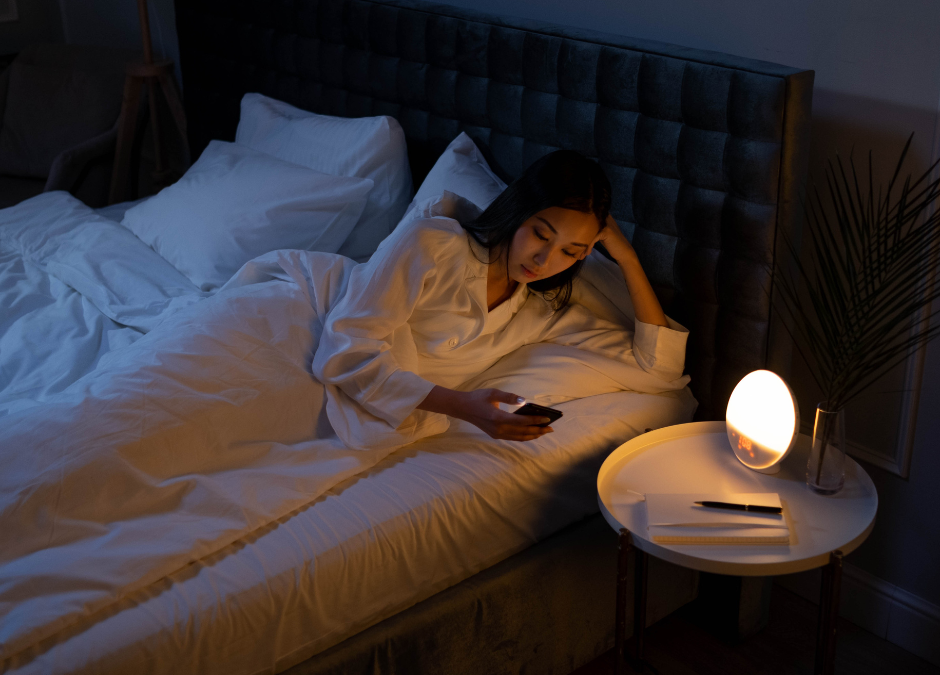
Lying awake in bed and waiting for sleep to come can actually make the problem worse. When you stay in bed for 20 to 30 minutes without falling asleep, your brain starts to associate the bed with frustration, restlessness, and anxiety rather than rest and relaxation.
A proven strategy from Cognitive Behavioral Therapy for Insomnia (CBT-I) is called stimulus control. It teaches you to get out of bed when you can’t sleep and do something calm in low light: a quiet activity like reading, light stretching, or listening to soft music. This helps retrain the brain to connect your bed only with sleep. When you feel sleepy again, return to bed. Over time, this approach strengthens the mental link between bed and sleep and reduces the pressure and anxiety that often keep people awake.
This strategy is supported by research and works best when combined with other CBT-I techniques. It is medication-free and empowers people to manage their sleep challenges sustainably. Counselor Jamie says, “This is a strategy that I teach my clients and practice myself. One thing that I do is to have a boring book on my nightstand that I can easily grab and go read in the living room.”
Try this tip tonight: If you’re tossing and turning, get up and sit somewhere quiet. Try reading a physical book or doing deep breathing exercises. Keep the lights low. Once you feel drowsy, head back to bed. Repeat this process until sleep returns naturally.
Dr. Garrett’s Sleep Resources
- Dr. Garrett’s Step-by-Step Sleep Guide_ How to Go from 5 to 8 Hours of Sleep per Night
- Dr. Garrett’s Top Sleep Recommendations
Recommended Books
- Cognitive Behavioral Treatment of Insomnia: A Session-by-Session Guide by Perlis, Jungquist, Smith, and Posner
- End the Insomnia Struggle by Colleen Ehrnstrom and Alisha L. Brosse
Recommended Website
- Sleep Foundation – CBT-I Overview: https://www.sleepfoundation.org/mental-health/cognitive-behavioral-therapy-insomnia
References
Bootzin, R. R., & Epstein, D. (2011). Stimulus control therapy. In M. L. Perlis, M. Aloia, & B. Kuhn (Eds.), Behavioral Treatments for Sleep Disorders (pp. 21–30). Academic Press.
Morin, C. M., & Benca, R. (2012). Chronic insomnia. The Lancet, 379(9821), 1129–1141. https://doi.org/10.1016/S0140-6736(11)60750-2