


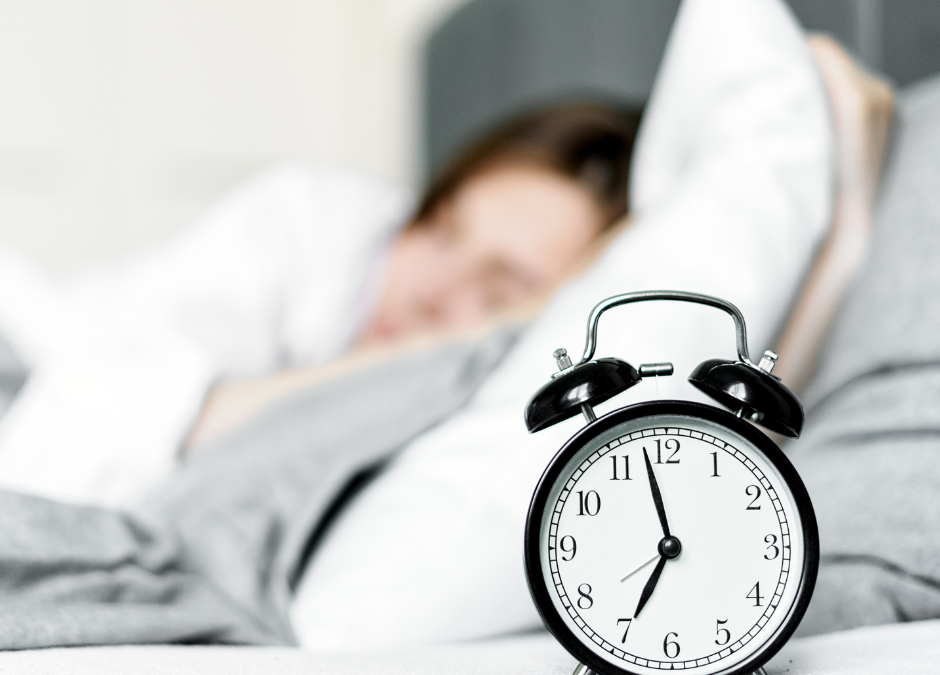
It’s easy to overlook your sleep schedule, especially when life gets hectic. But going to bed and waking up around the same time each day (even on weekends) can make a bigger difference than most people realize. Your body runs on an internal clock, and when that rhythm stays steady, everything from your energy levels to your mood tends to run more smoothly too.
When your sleep times jump around, it can throw off that rhythm. You might find it harder to fall asleep, stay asleep, or feel rested during the day. That’s because the brain relies on predictable signals to manage things like hormone release, alertness, and even digestion.
Over time, irregular sleep patterns have been linked to issues with focus, memory, stress, and long-term health problems like heart disease and a weakened immune system. There’s even a name for it: “social jetlag,” when your body’s natural rhythm doesn’t match your daily schedule. It’s common among students, shift workers, and anyone who burns the candle at both ends during the week and tries to catch up on weekends. According to Counselor Amy, LICSW, “Getting on a consistent daily sleep schedule is one of the best ways to combat irritability, inability to focus/concentrate, and overstimulation associated with ADHD in both kids and adults. As with anything, consistency and effort are the big keys here!”
The good news is that small changes really do help. Even adjusting your sleep and wake time by 15 minutes at a time can make a noticeable difference. With consistency, your body begins to trust the pattern, and you’ll likely sleep better, feel more clear-headed, and have more energy to work with during the day.
Dr. Garrett’s Sleep Resources
- Dr. Garrett’s Step-by-Step Sleep Guide_ How to Go from 5 to 8 Hours of Sleep per Night
- Dr. Garrett’s Top Sleep Recommendations
Recommended Books:
- Walker, M. (2017). Why we sleep: Unlocking the power of sleep and dreams. Scribner.
- Winter, W. (2018). The sleep solution: Why your sleep is broken and how to fix it. Berkley.
Recommended Blog/Website:
References:
Ganesan, S., Magee, M., Stone, J. E., Mulhall, M. D., Collins, A., Howard, M. E., Sletten, T. L., & Lockley, S. W. (2019). The impact of shift work and circadian dysregulation on health: A narrative review. International Journal of Environmental Research and Public Health, 16(19), 3501. https://doi.org/10.3390/ijerph16193501
Huang, T., & Redline, S. (2019). Sleep timing, sleep consistency, and health in adults: A systematic review. Sleep Medicine Reviews, 47, 1-17. https://doi.org/10.1016/j.smrv.2019.06.001
Phillips, A. J. K., Clerx, W. M., O’Brien, C. S., et al. (2017). Irregular sleep/wake patterns are associated with poorer academic performance and delayed circadian and sleep/wake timing. Scientific Reports, 7, 3216. https://doi.org/10.1038/s41598-017-03171-4
Wittmann, M., Dinich, J., Merrow, M., & Roenneberg, T. (2006). Social jetlag: Misalignment of biological and social time. Chronobiology International, 23(1-2), 497-509. https://doi.org/10.1080/07420520500545979