


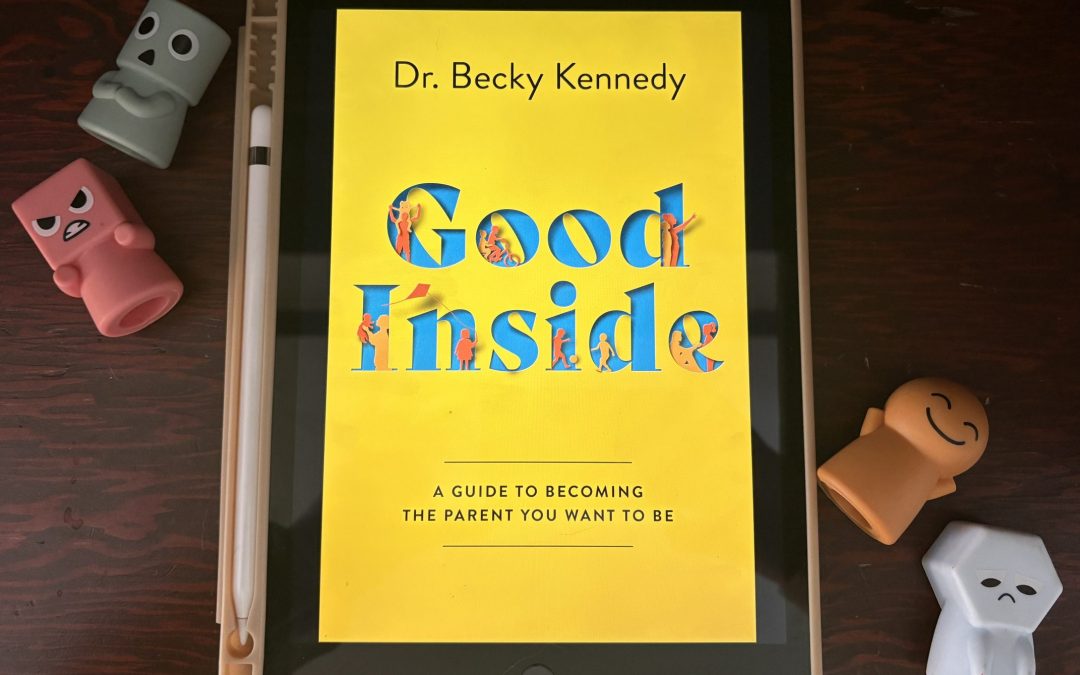
Parenthood comes with many joyous and frustrating moments. Some parents may find that their children adapt easily to transitions, follow rules, and regulate their emotions. On the other hand, parents may find themselves raising a “challenging Child” or, as Dr. Kennedy mentions in the book Good Inside, a “Deeply Feeling Kid”. A “Deeply Feeling Kid” may struggle with big emotions, leading to frequent meltdowns, defiance, easy frustration, aggression, irritability, and hyperactivity (Kennedy, 2022).
Positive Strategies
According to the American Academy of Pediatrics (2018), a few positive strategies that can be utilized include:
- Parents modeling appropriate behaviors.
- Setting clear, consistent, age-appropriate limits.
- Calmly and firmly explaining the consequences that will occur if a child misbehaves.
- Actively listen to your child’s story before attempting to resolve the problem.
- Praising good effort and success.
- Catch your child doing positive behaviors.
- Provide your child with attention to reinforce their good behavior.
- Redirecting misbehavior by having activities for your child to participate in. This is great for parents who find that their child misbehaves due to boredom.
When Strategies Don’t Work As You Had Hoped
Parents may have attempted each of those parenting strategies but found none of the approaches listed above effective in helping their “deeply feeling” children. Parents may feel discouraged, frustrated, and embarrassed by their child’s behavior. Dr. Kennedy (2022) reports that parents who have “deeply feeling” children will need to use creative approaches to reach their child. Dr. Kennedy reports that many of the behavioral approaches listed above will help shape the child’s behavior, but ultimately may not increase the connection between you and your child. Dr. Kennedy (2022) notes that her approach promotes “firm boundaries and parental authority while sustaining a positive relationship with your child that is built on trust and respect.” Here are a few approaches mentioned in Good Inside by Dr. Becky Kennedy:
Change in Perspective
Oftentimes, parents, out of frustration, may shame their child due to their bad behavior. Parents must recognize that their child is “good inside” without excusing the bad behaviors. However, shifting our thinking to what the child’s behavior is trying to communicate or what needs are not being met for the child will give parents a greater understanding of their child’s behavior. Dr. Kennedy (2022) discusses the importance of parents separating their child from the behavior (hitting, kicking, screaming, etc.) and creating a safe space for their child to “try and fail” to enhance the child’s emotional regulation and resilience.
Improving Communication with Your Child
Parents may often find themselves in constant power struggles with their child. To improve communication with your child, parents must understand the difference between “Understanding” and “Convincing”. Convincing tends to occur when parents seek validation of their viewpoint while disregarding the child’s (Kennedy, 2022). When parents try to convince their child that what they are saying is the correct way, it creates a power struggle in which both parent and child become defensive because neither feels seen or heard. Thus, Kennedy (2024) suggests that parents must enter each situation with understanding and consideration of their child’s thoughts, feelings, and viewpoints to improve communication with their child. Parents who take an understanding approach will find they can strengthen their bond with their child.
Self Regulation
Parents must regulate their own emotions before they can help their child regulate theirs (Kennedy, 2022). Parents who tend to strongly react to their child’s behavior notice that the situation has escalated. Parents may notice their child is now screaming and kicking. In intense moments, it is important for parents to identify their own thoughts and feelings (frustration and anger) about the situation and regulate their emotions before reacting (Kennedy, 2022).
Parenting is a beautiful but challenging time for parents. Thus, it is important for parents to recognize that taking care of themselves is crucial in helping their children regulate their own emotions. If you’re feeling overwhelmed or exhausted, it is important to engage in self-care activities. Parents who practice self-care find they can be fully present with their child. For more information on strategies that can be implemented at home, Good Inside by Dr. Becky Kennedy is a great resource to improve communication within the home.
For more parenting resources:
- Keeping Your Child Safe On Social Media
- 5 Tips for Dealing with Sibling Conflict
- Common Parenting Struggles … Plus, Our Advice For Working Through Them!
Sources
American Academy of Pediatrics. (2018, November 5). What’s the Best Way to Discipline My Child? HealthyChildren.org. https://www.healthychildren.org/English/family-life/family-dynamics/communication-discipline/Pages/Disciplining-Your-Child.aspx
Kennedy, B. (2022). Good inside: A guide to becoming the parent you want to be. Harper Wave, an imprint of HarperCollinsPublishers.