


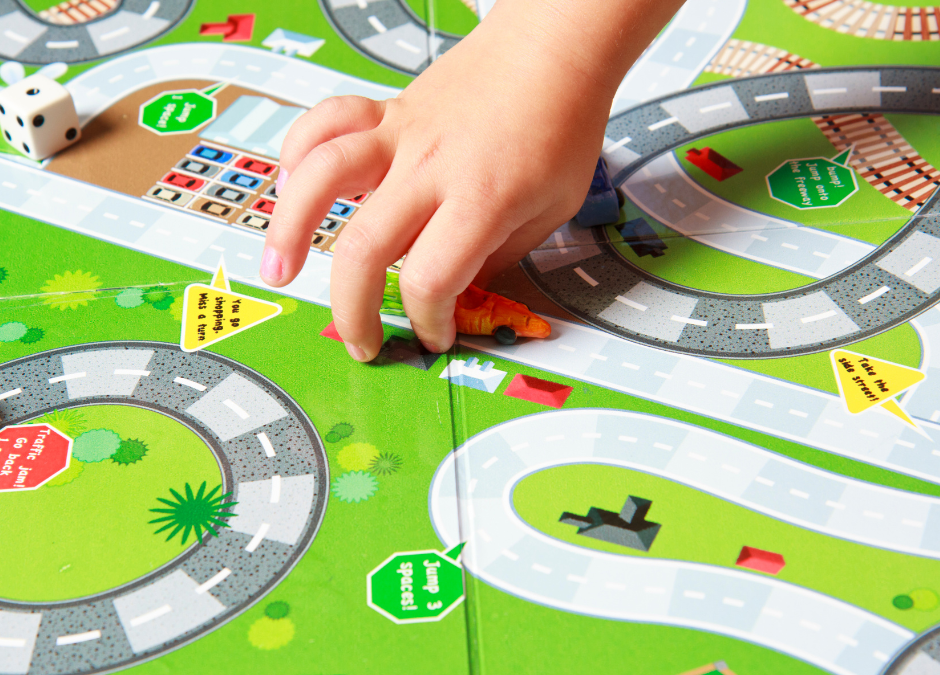
In this Digital Age, technology is easily accessible to all with a click of a button. Tablets, gaming systems, and smartphones provide individuals with instant enjoyment and entertainment. However, individuals who heavily use their digital devices may experience unfavorable consequences such as headaches, increase in stress and anxiety, poor sleep hygiene, and irritability. On the other hand, board games give individuals the opportunity to disconnect virtually and connect with family and friends face-to-face. Board games provide mental health benefits by offering a fun, safe environment for the whole family to enhance their life skills. Additionally, they provide can:
- Enhance Social Skills
- Enhance Moral Development
- Promote Positive Emotions
- Develop Resillience
- Enhance Cognitive Skills
- Enhance Communication Skills
- Promote Creativity
Counselor Sarah says, “Engaging in board games with family or friends can have so many benefits! From providing a space to connect to offering stress relief and cognitive stimulation, board games can be not only a way to bring people together but also a means to improve mood, enhance communication skills, and promote resilience. As a counselor, I love to utilize different board games, conversation cards, or even just visual pictures to help make discussions feel less stressful or intimidating.”
Board Games Enhance Social Skills
Board games give individuals the opportunity to build and form meaningful relationships through quality time. (Word Puzzles and Board Games Boost Brain Health, 2024). Furthermore, board games provide a safe space for individuals to teach and develop life skills like patience, perseverance, and humility that will be essential as children continue to grow and develop (Smith, 2023). While playing competitive board games with family and friends, children can develop skills such as taking turns, following rules, resilience, and graciousness in winning. On the other hand, cooperative board games can be used to enhance self-control, build empathy, and develop conflict resolution and teamwork skills. Counselor Lynsey shares, “Playing board games with friends and family is a wonderful way to foster community, create shared experiences, and build meaningful connections. It offers a (somewhat) structured environment where we can practice communication, problem-solving, and empathy. Engaging in games together often leads to lighthearted competition or collaboration, which can truly bring people closer. I enjoy playing board games with my loved ones as a means to bond, learn from one another, and create cherished memories that last a lifetime.”
Board Games Enhance Emotional Well-being
Board games allow individuals to shift their focus away from everyday stress, deadlines, and worries. Individuals who have taken time out of their busy schedules to connect with others by playing board games have noticed a shift in mood. Additionally, connecting with others through board games will create a fun atmosphere filled with laughter. Ultimately, increasing endorphins and serotonin within your body. Individuals who have an elevation in serotonin and endorphins experience a reduction of stress and anxiety (Davis). Lastly, board games can spark heated moments among families and friends, and they can be a great tool for modeling and teaching appropriate ways to regulate big emotions, such as frustration and anger that arise from these heated moments. Counselor Maegan says, “Board games offer countless benefits, including opportunities for bonding, emotional well-being, emotional regulation, and safe self-expression. My favorite aspect is the quality time spent connecting with others, fostering a sense of belonging and security while enjoying friendly competition in a controlled environment.”
Board Games Enhance Cognitive Skills
Board games provide an opportunity for individuals of all ages to enhance their cognitive skills. Through board games, individuals can engage in mental exercises such as analyzing information, enhancing flexible thinking, creating strategies, and solving problems (Kinne, 2023). Board games also facilitate the development of:
- Enhancing Working Memory
- Critical Thinking
- Response Inhibition
- Sustained Attention
- Task initiation
- Organization
- Metacognition
Board Games Enhance Communication Skills
Cooperative games can be a great tool for families to enhance their communication skills. Cooperative games give families the opportunity to work together and communicate to reach a shared goal. As a result, board games can be a tool for families to model and teach active listening and assertive communication skills. Cooperative games will allow individuals to enhance communication skills such as active listening, negotiation, collaboration, and resolve conflict (Wilson, 2023).
Types of Board Games & Their Benefits
Collaborative Board Games: Players work together to win! These types of board games pose a low risk of conflict because players unite to achieve a common goal. A collaborative board game will also allow players to enhance their social and communication skills. There are two types of collaborative board games:
- Collaborative (Failure Possible) Games: Dungeons & Dragons, Forbidden Island, Pandemic, The Lord of the Rings, Cauldron’s Quest, Hoot Owl Hoot, Count your Chicken, Mermaid Island, and Space Alert.
- Collaborative (No Failure Possible): Exit: The Secret Lab and Puzzles
Competitive Board Games: Competitive board games can be helpful for learning to handle conflict, regulate big emotions, and develop social skills.
- Direct Competitive Games: Wingspan, Clue, and Citadels
- Indirect Competitive Games: Sorry!, Trouble, Ticket to Ride, Agricola, Carcassonne, and Scythe
- Solo Loser Boardgames: Chutes and Ladders, Snoots and Toots, Candyland, Checkers, and Chess
For more content like this, you might enjoy these articles from our team.
References
Board games for Mental Health: Benefits for Adults & Kids. Bandpass Design. (2024, March 7). https://bandpassdesign.com/blogs/news/benefits-of-board-games
Davis, T. (n.d.). The hormones that boost happiness. Psychology Today. https://www.psychologytoday.com/us/blog/click-here-for-happiness/202312/hormones-that-boost-happiness?msockid=05b090d4b9266c0e3c51830db80a6da8
Kinne, O. (2023, July 18). Healthy Gaming Mentality – mental health and board games (Topic Discussion). Tabletop Games Blog. https://tabletopgamesblog.com/2023/07/18/healthy-gaming-mentality-mental-health-and-board-games-topic-discussion/
Smith, A. (2023, July 20). 5 Reasons Board Games Are Great For Your Mental Health – Technology Education. Technology Education. https://technologyeducation.org/board-games-for-your-mental-health/
Talbot, D. (2024, September 18). Dean Talbot. WordsRated. https://wordsrated.com/board-games-statistics/
Wilson, B. (2023, December 7). The benefits of board games for Cognitive Development. Medium. https://wilsonbenjamin.medium.com/the-benefits-of-board-games-for-cognitive-development-75376a2dcf22
Word Puzzles and Board Games Boost Brain Health. (2024). Psychology Today. https://www.psychologytoday.com/us/blog/the-full-picture/202412/word-puzzles-and-board-games-boost-brain-health?msockid=05b090d4b9266c0e3c51830db80a6da8